


Is Your Child Lacking Self-Confidence? 7 Ways to Use Stories to Boost Their Self-Esteem
Self-esteem is not about believing you are better than others, but about knowing you are valuable just as you are. Discover how magical stories can transform your child's self-perception.
Self-esteem is the backbone of a child's mental health. It is not simply about 'feeling good,' but about the deep conviction that one is capable of facing life's challenges and is worthy of happiness and respect. When a child has healthy self-esteem, they feel safe to explore, learn from their mistakes, and relate to others in a balanced way. However, in a world full of constant comparisons and high expectations, many children begin to doubt their own value from a very early age. This lack of confidence can manifest as extreme shyness, fear of trying new things, or a constant need for external approval. As parents and educators, our mission is to nurture that inner flame before external doubts blow it out.
Children's stories offer a unique opportunity to work on this aspect of personality without the child feeling judged or 'interrogated.' Through metaphor and symbolism, stories allow children to identify with characters who face their same insecurities. By seeing how a protagonist overcomes an obstacle or discovers a hidden talent, the child receives a subconscious message of hope and possibility. It is not just entertainment; it is a narrative therapy that shapes the emotional architecture of the child's brain, providing the necessary tools to build a solid and resilient identity in an environment that often awards perfection over authenticity.
What is Self-Esteem Really in Childhood?
We often confuse self-esteem with pride or arrogance, but in reality, they are opposite concepts. A child with high self-esteem does not need to prove they are better than anyone; they simply accept themselves. This acceptance is built on three fundamental pillars: the sense of belonging (feeling loved in their close circle), the sense of competence (feeling capable of performing tasks), and the sense of identity (knowing who they are and what they like). The lack of any of these pillars can shake the minor's emotional structure. Stories act precisely by reinforcing these pillars, showing worlds where difference is a virtue and where personal value does not depend on a grade on an exam or winning a race, but on effort and the kindness of the heart.
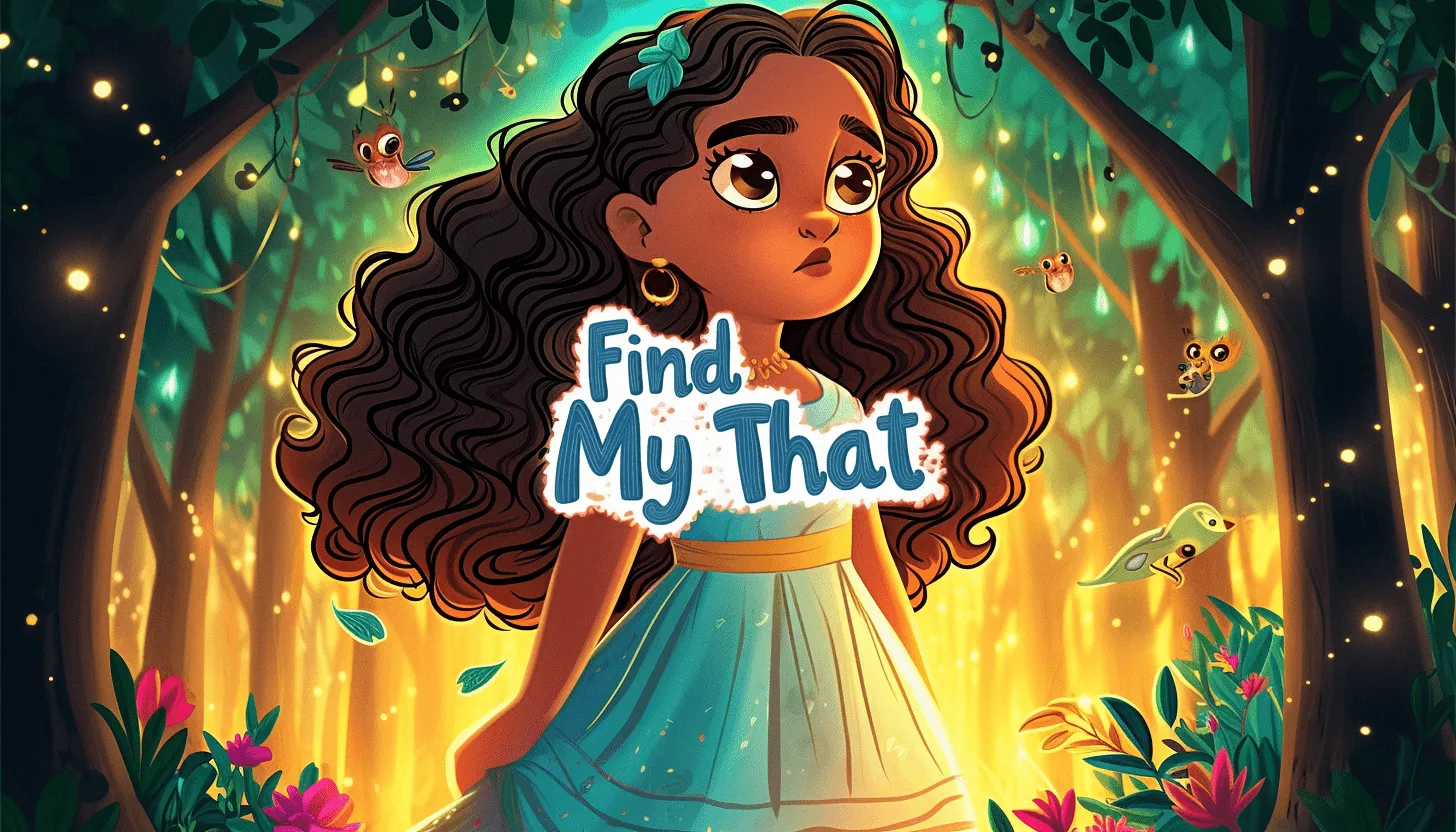
Research in neuropsychology suggests that stories activate the brain's reward system, releasing dopamine when the child experiences the character's success as their own. This emotional connection is key: for a child, the border between fiction and reality is porous. If Lia finds her special 'that' in a story, the child who accompanies her in reading feels that they too can find their own internal treasure. It is a transfer of emotional power that occurs in the calm of mom or dad's lap, in that magical moment before turning off the light, where the outside world disappears and only the truth residing in the pages of a book matters.
Golden Tip for Parents
Don't praise only the final result ('What a beautiful drawing!'), praise the process and identity ('I love how you've chosen these colors, you have a very special vision'). This helps the child value who they are, not just what they do. Sometimes, the greatest treasure is not in what we know how to do, but in discovering that unique spark that makes us different from everyone else. Do you want to discover how a small protagonist found her way in a world of colors?
The Science of Narrative and Confidence
When we read a story to a child, we are doing much more than turning pages. We are creating a 'safe space' where emotions can be explored without danger. The child's brain processes stories in the same way as real experiences. This means that if a character overcomes the fear of public speaking or feels proud of their work, the child's brain is practicing those same neural pathways of self-confidence. It's what psychologists call 'vicarious modeling.' The story acts as a dress rehearsal for real life. If the child sees that error is part of the path and that the protagonist does not lose their value for failing, they will learn to be more compassionate with themselves when they make their own mistakes.
Moreover, the descriptive language of stories helps children put words to their feelings. Many self-esteem problems are born from the inability to express 'I feel small' or 'I feel like I can't.' By finding these phrases in the mouth of a paper hero, the child normalizes their own experience. It is no longer 'the weird kid who doesn't know how to play,' it is 'someone who, like the protagonist, is looking for their place.' This external validation is the first step toward internal validation. Shared reading also strengthens the affective bond, and there is no greater reinforcement for self-esteem than the full and loving attention of a reference adult during reading time.
Low Self-Esteem
- Avoids challenges for fear of judgment
- Criticizes themselves harshly in the face of error
- Needs constant confirmation
- Feels inferior when comparing themselves
- Difficulty saying no
Healthy Self-Esteem
- Accepts challenges as learning
- Treats error with curiosity
- Trusts their own judgment
- Values their own uniqueness
- Sets boundaries with confidence
7 Techniques with Stories to Train Security
Implementing these techniques does not require being an expert in psychology, only the will to connect through reading. Here are seven practical strategies to transform the story moment into a confidence training for your child:
Identify Strengths in the Hero
After reading, ask: 'What do you like most about this character?'. Then, make the bridge: 'Did you know you have that same bravery when you try to eat something new?'. By associating positive traits of the character with the child, you are setting positive labels on their identity.
The 'Alternative Ending' Game
If a character does not achieve something, invent together how they could have tried it in another way. This fosters flexible thinking and reduces fear of blockage. It teaches that there is always a 'Plan B' and that our worth does not depend on Plan A working well the first time.
Reading Aloud with Characters
Encourage your child to voice a self-confident character. By putting on the voice and posture of someone confident, the body sends security signals to the brain. It's an 'acting' technique that allows experiencing the physical sensation of confidence.
Error Detectives
Look for stories where the protagonist messes up spectacularly. Celebrate the error as the beginning of the adventure. 'Good thing they were wrong, if not, they wouldn't have known the dragon!'. This deactivates toxic perfectionism.
The Magic Mirror of Stories
After a story about talents, look for the 'mirror.' What things from the story look like our house? What things the character does can you do too? This helps land the fantasy in the child's daily reality.
Empowerment Pauses
When the character doubts, stop reading and ask: 'What would you say to encourage them?'. What the child says to the character is, in reality, what they need to say to themselves. Listen carefully to those words: they are their own script of self-comfort.
Creation of Their Own Story
Write or draw a story where the child is the protagonist overcoming something everyday (like tying shoelaces or going to the dentist). Seeing yourself as the hero of your own story is the most powerful self-esteem exercise there is.
Growth Mindset vs. Fixed Mindset
Psychologist Carol Dweck coined these terms that are fundamental for self-esteem. A child with a fixed mindset believes their capabilities are unalterable: 'I'm bad at math.' A child with a growth mindset believes their capabilities develop with effort: 'I don't know how to solve this yet.' Stories are the perfect vehicle to teach the 'not yet.' Overcoming stories show that talent is only the starting point, but persistence is what builds success. By reading about a character's development, the child understands that they too are under construction. It is not important where they are today, but where they are going and the desire they put into the path. Modern fairy tales don't tell us we're perfect, they tell us we can change and learn, which is the most empowering message a child can receive.
The Role of the Adult: Active Listening and Validation
No book can substitute the reflection the child sees in their parents' eyes. The story is the tool, but you are the craftsman. During the reading, maintain eye contact, nod to their reflections, and never minimize their doubts. If the child says 'I'm not brave like the knight,' don't tell them 'yes you are' automatically; ask them 'when have you felt that way?'. Giving space to vulnerability is the highest form of respect. True self-esteem is born from knowing we are loved even when we don't feel brave or smart. By sharing these stories, we are saying: 'I see you, I accept you, and I am here with you in your adventure of growing up.' That basic security is the foundation upon which all their future confidence will be built.
No one can make you feel inferior without your consent.
Conclusion: A Lifelong Journey
Strengthening self-esteem is not a one-day task, but a constant journey. Stories are the compasses that orient that path when the fog of doubt covers everything. By providing our children with an arsenal of positive stories, we are giving them an internal language of support that will accompany them long after we have closed the book's cover. Tomorrow, when they face a challenge at school or in the park, that inner voice will remind them that they are unique, that error is welcome, and that, just like the heroes of their favorite stories, they carry within everything necessary to succeed in their own way. Open a book today and start sowing the security that tomorrow will allow them to fly high.