


Is Your Child Afraid to Fail? 5 Stories That Transform Mistakes into a Learning Adventure
Discover how perfectionism and fear of error can limit your child's potential, and how magical stories can teach them that failing is the first step toward success.
Fear of making mistakes is one of the most powerful invisible barriers in child development. For many children, the possibility of not doing it 'right' the first time is not just a stumble, but a direct threat to their identity and personal worth. This paralyzing perfectionism can manifest in many ways: from the child who tears up their drawing if they go outside the line, to the one who avoids playing something new for fear of losing. However, modern psychology tells us that the ability to see error as information and not as failure is the basis of a growth mindset. In this article, we will explore how children's literature can be the bridge to transforming panic into curiosity to learn.
When a child is afraid to fail, their brain enters a state of alert that blocks creativity and learning. The amygdala, the fear center, takes control, making it difficult for the executive functions of the prefrontal cortex—those that allow us to solve problems and persist—to function correctly. This is where stories intervene as a 'deactivator' of that stress response. By reading about others who err and survive (and even thrive), the child's nervous system receives the message that error is not a vital emergency, but a manageable situation.
The 'Perfect Child' Trap
We live in a culture that often rewards results over process. Without realizing it, we may be feeding the idea that only successes deserve attention and praise. This external pressure is the seed of perfectionism. A perfectionist child does not seek excellence out of love for the task, but seeks to avoid negative judgment. Fear of failing is, in reality, fear of stop being loved or valued. Therefore, it is vital to change the family narrative: moving from 'How well it turned out!' to 'I loved seeing how you tried even though it was difficult!'.
How Stories Demystify Failure
Stories are life simulators. They offer a 'zero risk' environment where the child can observe the consequences of failing without suffering them in their own skin. When a protagonist makes a huge mistake and, instead of being rejected, finds a creative solution or receives support from others, the child is internalizing a new life script. This process is called 'vicarious learning': the child learns through the character's experience.
Pro Tip
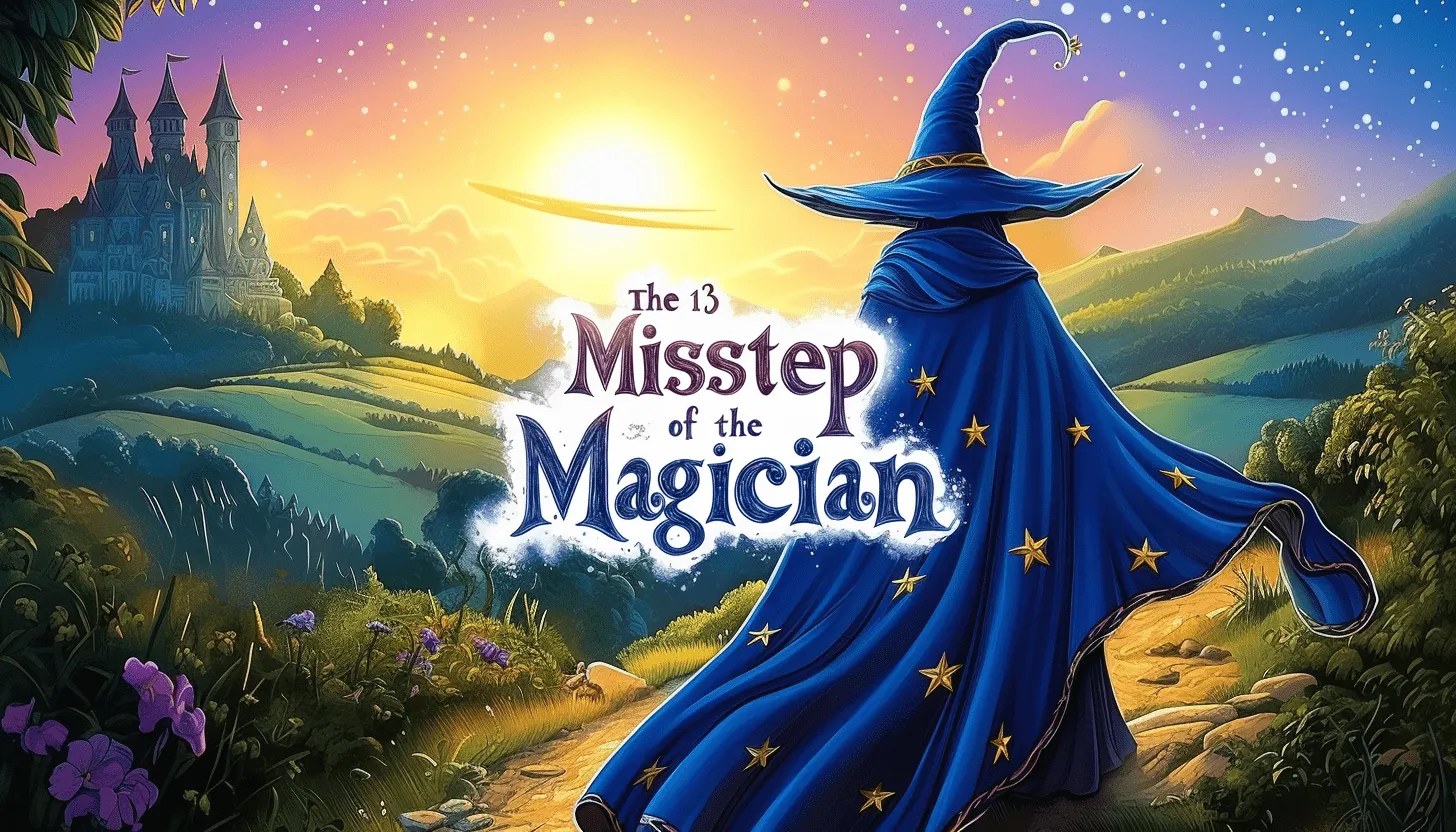
When you read a story where the character fails, don't flip the page quickly. Stop and say: 'Wow, they made a mistake. What's their face like? How would you feel?'. Normalizing the feeling of frustration is the first step toward overcoming it. But what happens when the fear of error is disguised as clumsiness and miscalculated magic? Find out with this story that will change the way they see failures:
Difference Between Fixed Mindset and Growth Mindset
Carol Dweck, a Stanford psychologist, popularized these fundamental concepts. Children with a **fixed mindset** believe that talent is innate: you are either smart or you're not. Therefore, error is proof that 'you are not smart'. Children with a **growth mindset** understand that the brain is like a muscle that grows with challenge. Error is, for them, the signal that the brain is working at its peak.
Perfectionism (Fixed Mindset)
- Avoids challenges to not look 'stupid'
- Gives up easily in the face of obstacles
- Sees effort as useless
- Ignores necessary constructive criticism
Resilience (Growth Mindset)
- Embraces challenges as opportunities
- Persists despite setbacks
- Sees effort as the path to mastery
- Learns from criticism and others' success
Another magnificent example is that of characters who take on difficult tasks that others have abandoned. This teaches that perseverance is a superpower.
5 Strategies for Parents: From Shouting to Guiding
To accompany a child with a fear of failing, we as adults must be their 'safe harbor'. Here are five practical tactics to apply today:
Make Error Visible
Make mistakes on purpose in front of them. 'Oops! I put too much salt in the soup. No problem, I'll put a potato in to absorb the flavor'. Show how you solve your failures calmly.
Remove the 'See how...?'
Phrases that highlight the error ('I told you it would break!') only increase shame. Instead say: 'Wow, it seems this plan didn't work, what other plan can we try?'.
Use the Power of 'NOT YET'
When your child says 'I don't know how to do it', always add: 'Yet'. It's a magical word that implies that learning is on its way.
Value the 'Bravery of Trying'
Reward the effort of signing up for a tournament or trying a new dish, regardless of the final result.
Create the 'Book of Big Failures'
Write a story together about a mistake you made and how it became something funny or a learning experience. Humor is the best antidote to fear.
The Importance of Rest and Calm
Sometimes, the fear of failing stems from exhaustion. A tired child has fewer emotional resources to manage frustration. Therefore, sleep routines and moments of disconnection without expectations are fundamental. Reading a story before bed, without looking for a forced moral, simply for the pleasure of company, helps lower cortisol levels and prepare the mind to face the next day's challenges with greater optimism.
I have not failed. I've just found 10,000 ways that won't work.
The Role of Self-Esteem in Resilience
Self-esteem is not about believing we are perfect, but about accepting ourselves when we are not. A child who feels intrinsically valuable will not see error as a threat to their being. Stories help build this foundation by presenting worlds where characters are loved for who they are, not for what they achieve. This emotional safety is what allows them to take risks. Without the fear of losing affection, the child feels free to explore their limits.
Long-Term Benefits of Embracing Error
Training resilience in childhood has benefits that extend into adulthood. Adults who learned to fail as children are more likely to entrepreneur, innovate, and maintain healthy relationships, since they do not fear conflict or rejection in an irrational way. The 'pedagogy of error' that we start today with a simple story is, in reality, an investment in their future success and long-term mental health.
Conclusion: Error as a Gift
Ultimately, we want our children to understand that a life without errors is a life without growth. A blank piece of paper is safe from scribbles, but it's also empty of stories. By providing them with stories where error is welcome and persistence is celebrated, we are giving them the most valuable gift: the freedom to be human.
The next time you see your child hesitate in the face of a new challenge, remember that you have a powerful tool on your bookshelf. Open a book, find a brave character (especially one who is bravely imperfect), and give them permission to fail. Because only those who dare to fall, discover that they have wings.