


Can't Your Child Focus? 7 Techniques with Stories to Train Their Attention
Discover how narrative and shared reading can be the most effective tools for developing focus and sustained attention in childhood.
Nowadays, we live in an era defined by constant overstimulation and digital immediacy. Children, from a very early age, are exposed to a huge amount of visual and auditory impacts that, while they can be entertaining, often fragment their attention span. This reality has generated growing concern among parents, educators, and neurodevelopment specialists, who observe how the ability of little ones to focus on a single task for a long time seems to be decreasing. However, there is an ancestral, simple, and deeply powerful tool that can reverse this trend: the told and shared story.
Concentration is not a skill you are born with in an immovable way; it is, to a large extent, a capacity that is trained and strengthened with use. Just as a muscle requires exercise to gain resistance, a child's attention needs appropriate contexts to develop. Storytelling offers precisely that protected environment, where the pace is slow, the narrative has a beginning, a development, and a logical outcome, and the child must process the information sequentially. Through stories, we invite the child's brain to step out of the automatic reaction to external stimuli and enter a state of deep and reflective processing.
The Science behind Sustained Attention
From a neuroscience point of view, sustained attention is the ability to maintain focus on a specific activity for a given period of time, ignoring distractions that may arise. When a child listens to a story, their brain activates multiple areas simultaneously. The prefrontal cortex, in charge of executive functions, must coordinate the input of auditory information with the creation of mental images in the visual cortex and the processing of meanings in language areas.
Unlike fast-paced digital content, where visual transitions happen every few seconds, the story forces the child to wait. This waiting is fundamental for the development of cognitive patience. The brain learns that to obtain the emotional reward of the story, it must invest time and attention. This process reinforces neural circuits related to impulse control and the ability to delay gratification, skills that are basic pillars for academic and personal success in the future.
Differences between the Screen and Shared Narration
It is common to believe that if a child can spend an hour in front of a video, they have a great attention span. However, specialists distinguish between passive attention (captured by intense and changing stimuli) and active attention (voluntarily directed by the individual). Fast-paced videos usually exploit the brain's novel-response architecture, keeping the child 'trapped' by constant impact, which can actually exhaust their attentional resources.
Fast Video Consumption
- Passive and reactive attention
- Images imposed by the device
- Fast pace that fragments focus
- Little need for abstraction
Story Reading
- Active and voluntary attention
- Images created by the child's mind
- Pace adaptable to the child's understanding
- High demand for symbolic processing
Strategies to Foster Focus during Storytelling
Not all reading moments have the same impact on attention. To maximize concentration training, it is necessary to take care of certain aspects of the environment and interaction. Creating a reading sanctuary, a space free of screens and disruptive noises, is the first essential step. When the environment is quiet, the child's nervous system can relax, reducing their state of alertness and facilitating immersion in the imaginary world.
Environment Preparation
Turn off electronic devices and find a comfortable place with soft lighting to reduce unnecessary external stimuli.
Bonding Establishment
Ensure initial eye contact and physical proximity. Emotional safety is the best lubricant for learning.
Interactive Narration
Make strategic pauses to invite the child to predict what will happen. This keeps their mind actively working on the plot.
Posterior Reflection
Upon finishing, dedicate a few minutes to discuss the story. This helps consolidate memory and global understanding.
The importance of the tone of voice
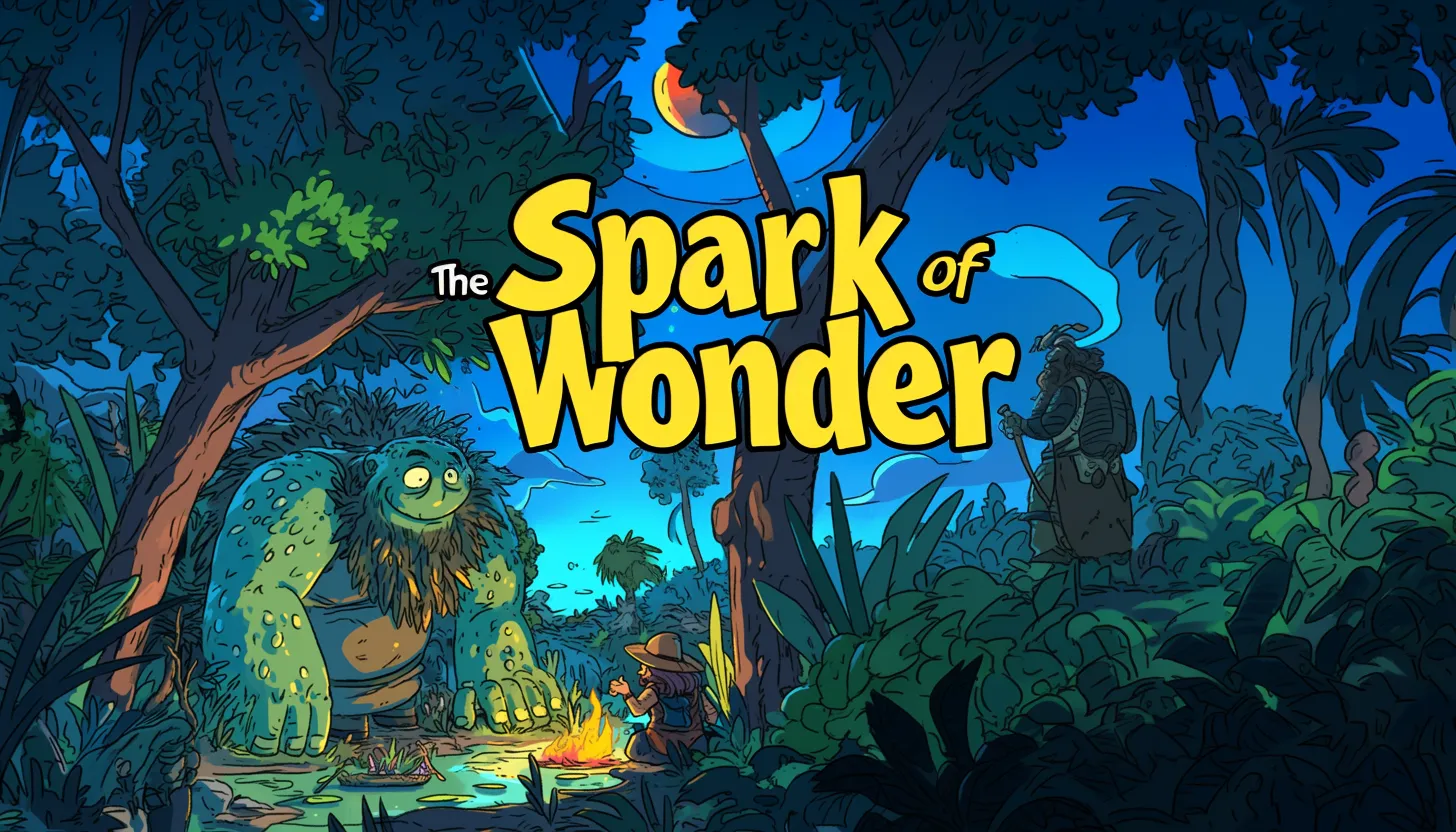
The narrator's voice acts as a guiding thread that leads the child's attention. The use of nuances, changes in rhythm, and deliberate silences creates a dynamic of tension and relaxation that keeps the child hooked without overstimulating them. Silence, in particular, is a powerful tool: it allows the child to process what they have just heard and visualize the scene in their mind before continuing. This slow processing is exactly what the brain needs to develop deep and lasting neural connections. But what if you had in your hands a story precisely designed to guide your child's focus toward a state of wonder and calm?
The Role of Curiosity and Anticipation
Curiosity is the natural engine of attention. A good story knows how to plant questions in the listener's mind. How will the character get out of that problem? What decision will they make next? Maintaining that anticipation requires the child to retain past information and combine it with the present situation to formulate hypotheses. This mental gymnastics is one of the most complete forms of cognitive exercise that exists for executive attention.
Practical Fact
Cumulative stories (those where a structure is repeated and a new element is added each time) are excellent for training working memory and attention to detail in young children.
Benefits observed in academic performance
There is a direct relationship between focus training through reading and performance in areas such as mathematics and reading comprehension. Solving complex mathematical problems requires the child to maintain multiple variables in their mind while operating with them, a function known as working memory that is intimately linked to sustained attention. Children used to following complex plots in stories usually find it easier to follow long school instructions and understand abstract statements.
| Child's Stage | Estimated Focus Time | Recommended Story Type |
|---|---|---|
| 2-3 years | 5-10 minutes | Sensory and repetitive stories |
| 4-5 years | 10-20 minutes | Stories with simple conflicts and clear morals |
| 6-8 years | 20-40 minutes | Adventure stories with subplots and complex characters |
| 9+ years | 45+ minutes | Chapter novels with psychological evolution of characters |
Developing Empathy through Focus
Attention is not only useful for academic tasks; it is also the basis of human connection. Actively listening to another person requires the same type of attentional effort as listening to a story. By training the child to pay attention to the feelings and motivations of literary characters, we are preparing them to read the social and emotional signals of the people around them in real life. Empathy is born from focus: we cannot understand the other if we are not able to give them our full and non-judgmental attention.
Attention is the rarest and purest form of generosity we can offer to another human being, and that capacity is sown in childhood with every page we read together.
Reading as a Refuge in Complexity
In addition to cognitive benefits, there is an emotional component of calm. Getting into a story allows the child to 'downshift'. In a world that sometimes seems to go too fast for their processing capabilities, the book offers a time made to their measure. This reduction in environmental stress favors a mental state of openness and learning. A calm child has a much wider attentional window than a stressed or overstimulated child, who will operate from a mode of survival and rapid response.
The repetition of the favorite story
Many parents wonder why their children ask for the same story over and over again. Far from being negative, repetition is a mastery tool. Each time the child hears the same story, their brain can dedicate fewer resources to understanding the basic plot and more resources to noticing nuances, rare words, hidden intentions of the characters, or details in the illustrations. This deepening into the known is excellent training for attention to detail and critical analysis capacity.
The impact of illustrations on concentration
In picture books, images are not mere decorations; they are an integral part of the narrative that requires its own decoding effort. Observing a detailed illustration while listening to the story forces the child to perform a correspondence exercise between what they hear and what they see. This sensory integration is key to maintaining focus. When we invite the child to look for details hidden in the images, such as a small mouse that appears on all the pages or a subtle change in the landscape's weather, we are gamifying sustained attention training, making it a fun and rewarding challenge.
In addition, illustrations allow the child to rest their word-processing cognitive load and focus on visual interpretation. This change of register within the same activity helps avoid mental fatigue and allows the reading session to be longer without the child losing interest. Well-designed images act as visual anchors that keep the child's mind in the here and now of the story, reducing the likelihood of their thoughts wandering to stimuli outside the book.
Reading as an early Mindfulness exercise
Although we often associate mindfulness with formal meditation, shared storytelling is one of the most natural ways to practice mindfulness with children. Mindfulness means being present intentionally in what is happening. During the story, the child is immersed in a unique sensory and emotional experience. They are not thinking about what they will have for dinner or the toy they lost; they are present with the dragon, the rocket, or the forest rabbit. This state of flow or 'flow' is the culmination of concentration.
Teaching a child to enter this state of literary immersion is giving them a mental refuge for life. In moments of future anxiety or stress, their brain will remember the ability to anchor itself in a meaningful activity and find calm through focus. Stories, therefore, not only train the brain for performance but also prepare it for emotional well-being. A child who knows how to concentrate is a child who has more tools to regulate their own nervous state through directed attention.
Criteria for choosing stories that improve attention
Not all books serve this purpose in the same way. When choosing stories focused on concentration, we should look for those that have a coherent narrative rhythm but leave room for surprise. Stories with moderate suspense structures, where the outcome depends on clues that have been planted previously, are ideal because they reward the child who has been attentive throughout the story. Likewise, informative books on topics that fascinate the child (dinosaurs, space, insects) take advantage of their intrinsic motivation to extend their natural attention limits.
- Books with rich visual details that invite close inspection.
- Stories with clear sequential plots that facilitate logical follow-up.
- Narratives that use descriptive and evocative language, stimulating the formation of mental images.
- 'Search and find' stories to train specific selective attention.
- Narratives that include moments of calm and introspection in the characters.
The benefit of reading aloud
Even when children already know how to read for themselves, continuing to listen to stories aloud remains enormously beneficial for their concentration. Listening requires a different processing than visual reading; the ear must capture the intonation, pauses, and rhythm, integrating them with the meaning of the words. This bimodality (hearing and visualizing) is high-level brain gymnastics. Furthermore, reading aloud allows the child to access stories that might be too complex for their current technical reading level, but that their intellect is perfectly capable of processing and enjoying, thus keeping alive the interest in deep content.
This shared exercise also reduces the load of anxiety that some children feel when facing a difficult text alone. By reading for them, we remove the pressure of decoding and allow them to focus exclusively on understanding and enjoyment. This creates a positive association with the act of concentrating, eliminating the feeling of tedious effort and replacing it with one of shared adventure. The human brain is biologically predisposed for oral narrative, and taking advantage of this inclination is the fastest route to a solid and disciplined attention.
Conclusion: The Habit of Attention
Improving child concentration does not require complex programs or advanced technology; it requires time, presence, and good stories. By turning reading into a daily habit, we are providing children with a fundamental competitive advantage for their life: the ability to own their own focus. In a future where attention will be the scarcest resource, those who know how to concentrate, deepen, and reflect will have the necessary tools to navigate any challenge. Stories are, in short, that safe harbor where the child's mind learns to anchor its attention and from there, explore the immense sea of knowledge and emotion.
As adults, our responsibility is to protect those reading spaces, ensuring that the noise of the digital world does not extinguish the voice of imagination. Every minute dedicated to a story is a minute of training for a more conscious and focused life. Let's start today to build that cathedral of attention, brick by brick, page by page, sharing the literary journey with those we love most.